


























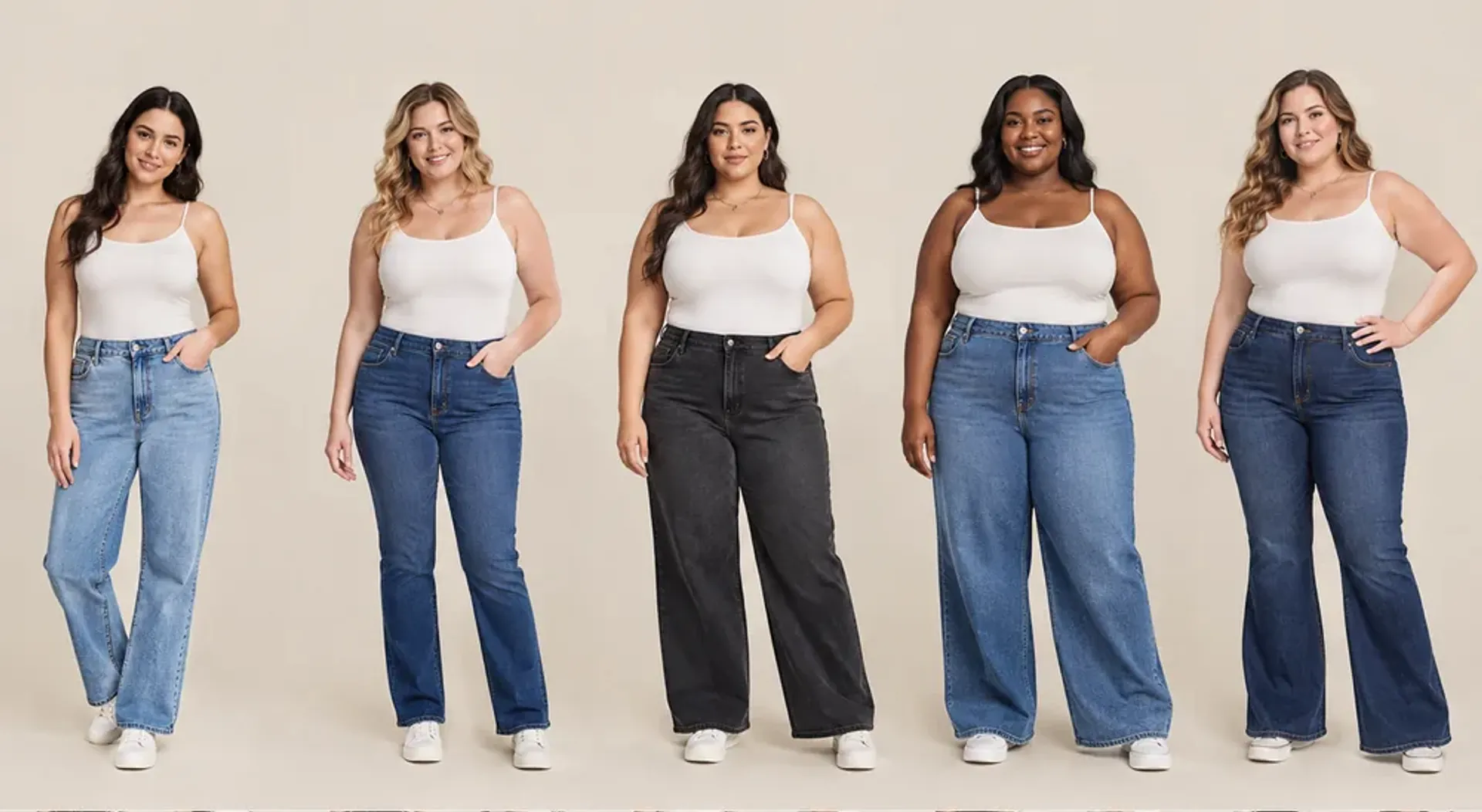
Shopping for women’s jeans online can easily turn into a game of guessing. One brand’s size 10 fits like an 8, while another’s waist gaps open the moment you sit down. Because denim lacks the forgiving drape of softer fabrics, finding a fit that matches your body structure requires more than just picking a standard numeric size.
To bypass constant returns and find jeans that actually fit your hips, waist, and inseam, here is your definitive size guide for women’s jeans.
1. Take Accurate Body Measurements
Never rely on the tag size of an old pair of jeans—denim stretches out over time, and manufacturer standards vary wildly. Use flexible measuring tape to record these three metrics:
- Waist (Narrowest Point): Measure around your natural waistline, typically located 1 to 2 inches above your belly button. Keep the tape relaxed without pulling it taut.
- Hips (Widest Point): Stand with your feet together and wrap the tape around the fullest part of your hips and rear.
- Inseam (Leg Length): Measure along your inner thigh from the crotch seam down to your ankle bone (or where you want the leg hem to land).
2. Decode the Size Matrix (Numeric vs. Waist-Inch Sizing)
Most brands list their jeans using either standard numeric sizing (2 through 32) or waist-inch measurements (26 through 61).
Use this standard comparison matrix to translate measurements when checking a brand-specific size guide for women’s jeans:
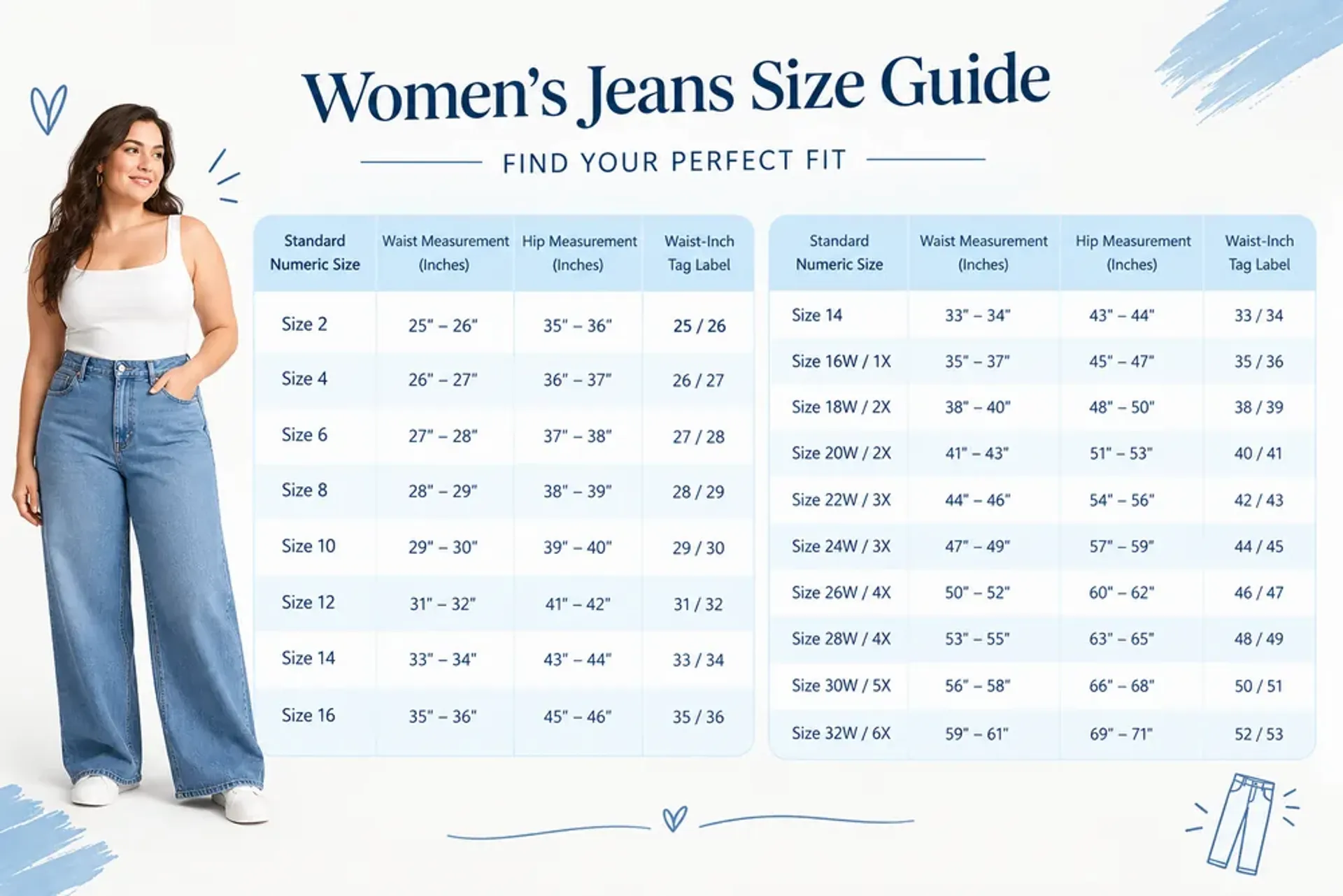
Fitting Rule: If your hip measurement places you in a Size 10, but your waist fits a Size 8, always size to your hips. Adjusting a waistband or using a belt is simple; forcing tight denim over your hips compromises both comfort and fabric integrity.
3. Account for Fabric Blend and Stretch Percentage
The material breakdown printed on the tag directly alters how a size guide for women’s jeans applies in real life.
- 100% Rigid Cotton: Zero stretch. Rigid denim holds its shape but runs stiff. If you fall between sizes, size up by one full size to allow room for movement.
- Low Stretch (98% Cotton / 2% Elastane or Spandex): The industry standard for structured denim. Offers just enough flex around the hips while holding the waistband firm. Stick strictly to your measured size.
- High Stretch / Jeggings (4%+ Elastane): Extremely pliable. These hug every contour but tend to relax and loosen after a few hours of wear. Consider picking the smaller option if you fall between sizes.
4. Match the Rise to Your Torso Proportions
The rise measurement (from crotch seam to top of the waistband) determines where the jeans anchor on your body:
- Low-Rise (7″–8″ Rise): Sits low on the hips. Works best for shorter torsos or straight body shapes.
- Mid-Rise (8″–10″ Rise): Sits just below the navel. A universal cut that prevents waistband gaping for most body profiles.
- High-Rise (10″–12″ Rise): Sits at or above the natural waist. Secures the midsection, prevents slipping when sitting, and pairs seamlessly with cropped or tucked-in tops.
5. Key Denim Considerations for Plus-Size Figures
Finding jeans that fit a curvy or plus-size body often involves navigating unique structural challenges beyond basic waist measurements. Here is what to keep in mind:
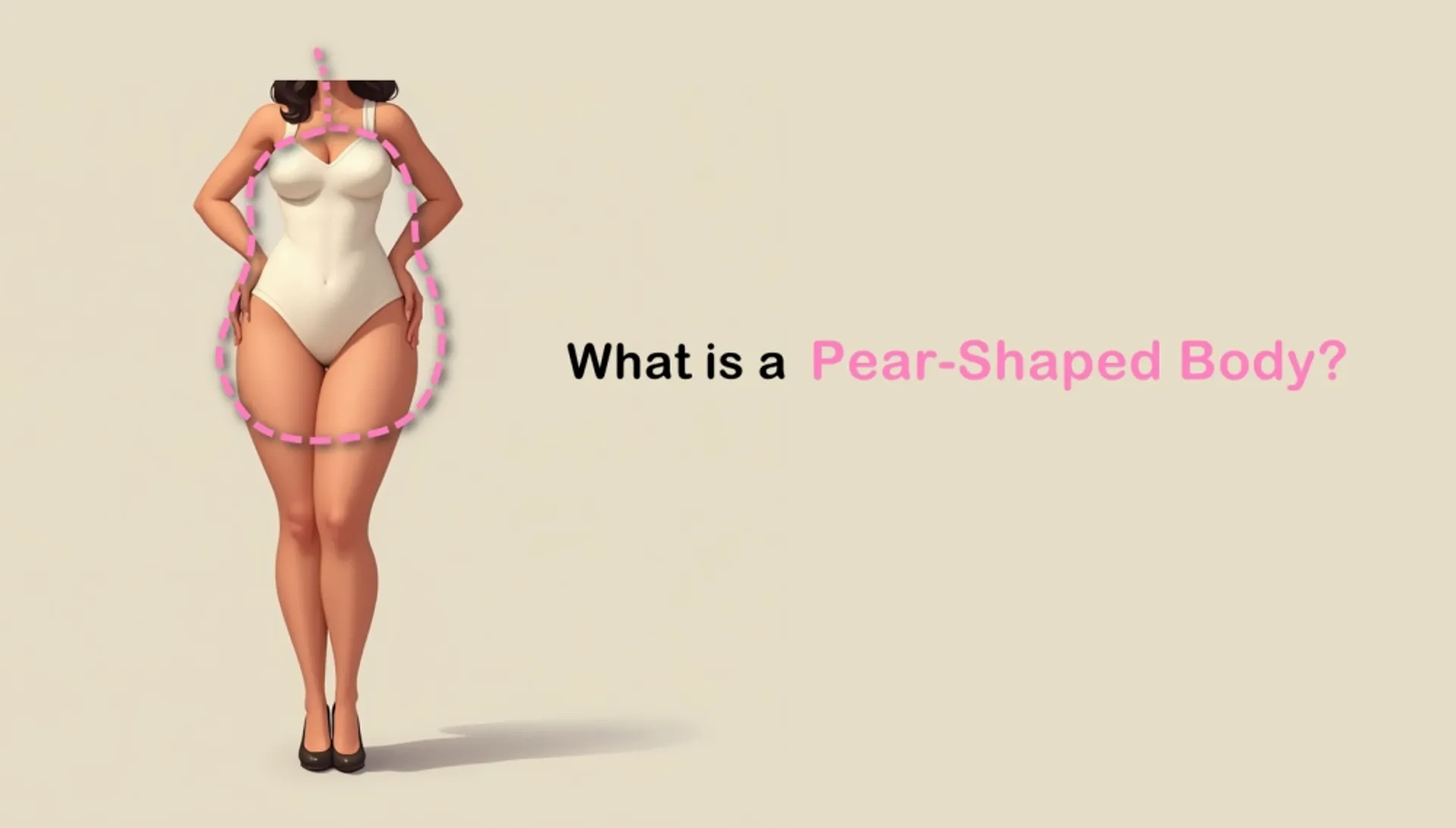
- Watch for the Waistband Gap: If you have a high waist-to-hip ratio (hourglass or pear shape), jeans that fit your hips may gap at the back of your waist. Look for jeans labeled “Curvy Fit,” which are engineered with a higher back rise and a narrower waist-to-hip proportion.
- Prioritize High-Waisted Cuts: A high rise (11 inches or higher) provides continuous coverage and support for the midsection, preventing the waistband from rolling down when you bend or sit.
- Check the Inseam & Thigh Proportion: Plus-size denim often stretches significantly across the thighs, which can shorten the effective inseam length. If you are between inseam lengths, opt for the slightly longer option to account for fabric pull across the hips and thighs.
Wrap Up & Celebrate Your Fit
Finding denim that fits your unique body structure shouldn’t feel like a compromise. By measuring your body accurately, understanding fabric stretch, and checking brand-specific size guides, you can shop with complete confidence and skip the hassle of constant returns.
Remember, true style is about wearing clothes that make you feel comfortable, confident, and authentically yourself.